
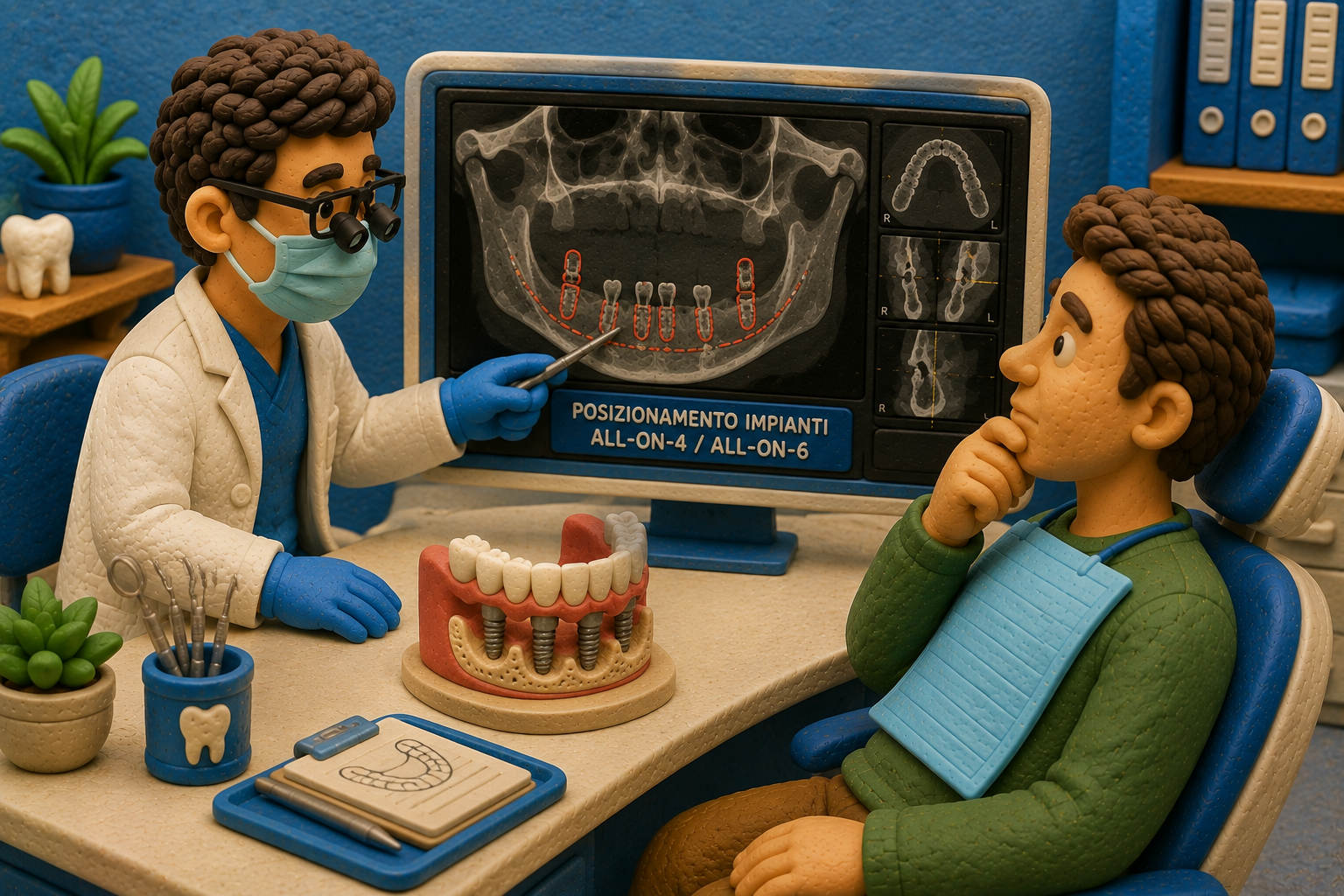
When people talk about dental implants, the attention almost always goes to the technique (All-on-4, All-on-6, single implant) or the final price. An element that matters just as much, and is far harder to verify on your own, is the implant brand: the manufacturer that makes the titanium screw actually placed in the bone.
Not all brands are equivalent. Some have invested for decades in independent clinical research and have a global distribution network; others entered the market more recently, with more limited scientific literature and a more regional footprint. This guide explains how an implant is built, why the brand really matters, and broadly how the most common manufacturers are positioned — so you can ask for (and understand) the right information before signing off on a quote.
In this article
What a dental implant is and how it's built
A dental implant isn't a single piece, but a small system made up of several components, each with a specific function. Understanding this structure helps explain why the brand — that is, who manufactures these components and how — makes a difference.
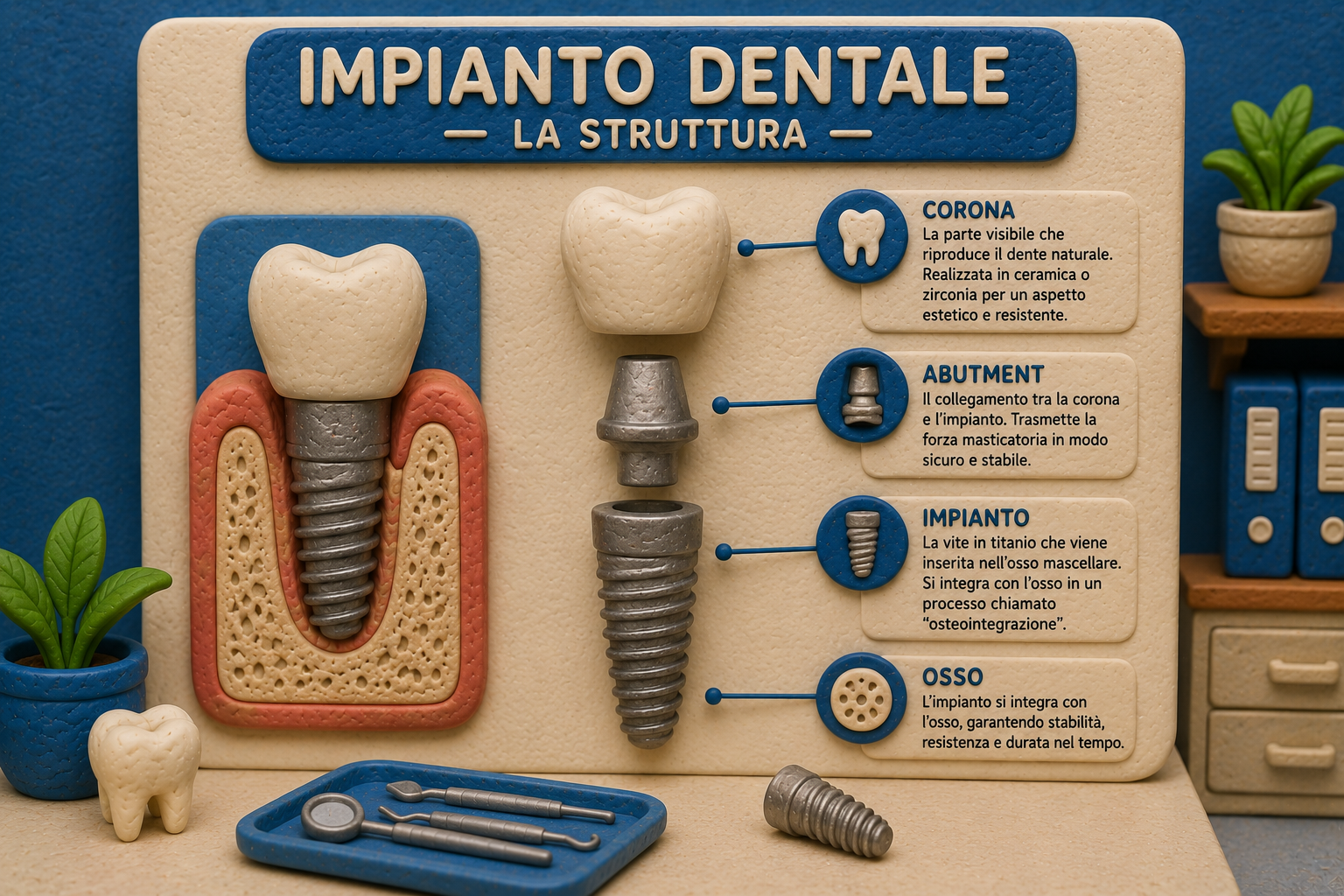
- Crown: the visible part, which reproduces the natural tooth. Made of ceramic or zirconia for adequate appearance and strength.
- Abutment: the connector between the crown and the implant. Transmits chewing force securely and stably.
- Implant: the titanium screw inserted into the jawbone, which fuses with it through osseointegration.
- Bone: the tissue that receives the implant and ensures its stability, strength and durability over time.
When people talk about the "implant brand," they're referring specifically to whoever manufactures the titanium screw and the abutment — the components that stay in the body for years and need to be reliably compatible with one another.
Why the implant brand matters
From a patient's point of view, one titanium screw can seem the same as any other. In clinical practice it isn't, for several concrete reasons:
- Independent scientific literature: the most established brands have decades of published, verifiable clinical studies on the long-term performance of their implants; newer or less widespread brands have far fewer.
- Surface technology: how the titanium surface is treated directly affects the speed and quality of osseointegration.
- Long-term spare-part availability: if the implant ever needs work in the future (a new abutment, a new crown), that brand and model need to still be available, even many years later and in a different country.
- Clinician training: larger manufacturers invest in structured training networks for the dentists who use their systems, which affects placement quality.
- Manufacturer's warranty: more established manufacturers offer stronger, better-documented warranties on their implants.
The brand doesn't replace the dentist's skill
An excellent-brand implant placed poorly is worth less than a solid-brand implant placed by an experienced dentist. The brand is one of the factors to weigh, not the only one — it should be considered alongside the credentials of whoever performs the procedure.
How to evaluate an implant brand
To compare brands in a useful way, rather than relying on hearsay, it helps to look at verifiable criteria. This is also the approach we use to position brands in the table below: not a ranking based on taste, but a reading of how documented and traceable each brand is.
- Years on the market: how long the manufacturer has been making dental implants, and how consistently.
- Independent scientific literature: how many clinical studies published in peer-reviewed journals, not funded solely by the manufacturer itself, document its long-term results.
- International presence: how extensive the distribution, support and clinician-training network is across multiple countries.
- Manufacturer's warranty: whether a warranty exists in writing directly from the manufacturer, not only from the individual clinic.
- Surface technology: whether the titanium surface treatment is proprietary, documented and tested at scale.
Implant brands compared
This table summarizes how the leading brands are generally positioned in prevailing clinical perception, based on the criteria above — years on the market, independent scientific literature, international presence and warranty. It is not an absolute hierarchy of the clinical quality of any single implant, which also depends on who places it and the specific case.
| Tier | Brand | Country of origin | Note |
|---|---|---|---|
| Premium | Straumann | Switzerland | Among the pioneers of SLA surface technology for osseointegration; extensive independent scientific literature accumulated over decades |
| Premium | Nobel Biocare | Switzerland / United States | Direct heir to the original protocols of modern implantology; one of the most documented systems in the world |
| Premium | Hiossen (Osstem group) | South Korea / United States | Among the highest-volume manufacturers in the world, with a very extensive distribution and training network |
| Premium | Zimmer Biomet Dental | United States | Heritage in orthopedic and dental implants, with an established international presence |
| Mid | DIO Implant | South Korea | Good international reach and a growing track record, though smaller than the premium-tier brands |
| Lower-mid | MegaGen | South Korea | Widespread mainly in Asia and some emerging markets; more limited independent literature than the leaders |
| Budget | Lesser-known brands (e.g. J Dental and similar) | Variable | Lower international traceability and fewer long-term independent studies; often chosen by clinics to keep costs down |





Mid tier: DIO and MegaGen
DIO Implant and MegaGen are Korean manufacturers with a growing international footprint, used by many clinics outside Asia too, including several clinics oriented toward dental tourism. They don't have the same volume of independent scientific literature accumulated by the premium-tier brands, but they remain structured manufacturers with their own distribution and support network — they shouldn't be confused with generic brands lacking traceability. They're often offered as a compromise between quality and price.
Budget tier: the less traceable brands
There is also a tier of brands that are less known internationally — often referred to generically as "premium materials" without ever specifying the name, or identified by poorly documented trade names, as with brands such as J Dental and similar. The main problem with this tier isn't necessarily the quality of any single implant, but its poor traceability: fewer long-term independent studies, more limited distribution networks and, in some cases, greater difficulty sourcing compatible components if maintenance work is needed in the future, especially if the patient has since moved to a different country.
The lowest price can conceal a brand from this tier
If one quote is noticeably lower than others for the same treatment, one of the most common reasons is precisely the use of a lesser-known implant brand. That's not automatically a problem, but it's information that should be asked for explicitly, not left unstated.
Why the brand should be written into the quote
A quote that simply states "titanium implants" or "high-quality materials," without specifying the brand and model, doesn't let you verify any of what this guide has covered. The implant's brand and model should appear in writing, on the same footing as other line items such as the crown material (zirconia or metal-ceramic) or the technique used (All-on-4, All-on-6, single implant).
Questions to ask
- What brand and model of implant will you use for my treatment, in writing?
- Does that brand have a distribution network in my own country too, in case I need follow-up care in the future?
- What warranty does the manufacturer offer on that specific implant, not just the clinic?
- If the brand isn't among the best known, why was it chosen for my case?
- Are the crown, abutment and implant all from the same brand, or are they mixed components from different manufacturers?